Mission Omok (TAKE FIVE)#

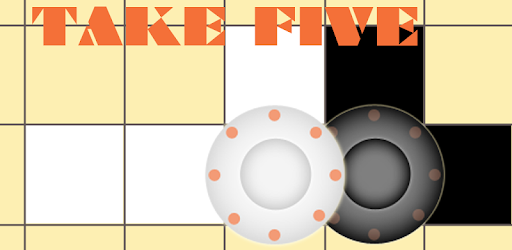
Mission Omok (TAKE FIVE) is an Android game that I released on Google Play around 2014. It has since been removed from Google Play for maintenance reasons.
Back then, puzzle games like Candy Crush were booming. I remember thinking, “Gomoku/Omok is a familiar rule set, but maybe no one has really ‘claimed’ it with a standout concept yet.” So instead of building a plain Gomoku clone, I decided to create a version with a fresh theme and a mission-based structure.
Concept: two UFOs playing “territory control” Gomoku#
The base rule follows Gomoku: you win by occupying five consecutive cells—horizontally, vertically, or diagonally. But instead of stones, the theme was two UFOs moving around the grid and occupying territory.
To keep the game interesting as stages progressed, I added a few extra mechanics:
- Score mapping: each cell had a score value, so which territory you claimed could change your score and strategy.
- Resource limits (by color): resources were limited, so you could occupy at most (N) cells of certain colors—forcing you to think about both “winning” and “constraints.”
In short, I tried to layer “puzzle-like constraints” on top of Gomoku’s simplicity, so each match would offer more varied decisions.
Demo video#
Here’s a gameplay demo video. (The game had background music and sound effects, but they’re missing from the video.)
Store listing at the time (original English description, lightly edited)#
Below is the English description I used in the store listing back then, with minor grammar and wording fixes:
Do you know Renju, Omok, or Gomoku?
TAKE FIVE is based on Renju, but comes with special features.

The special features are:

First)
Flying saucers move around and occupy areas.
You win if your flying saucer occupies a continuous series of five areas—horizontally, vertically, or diagonally.

Second)
You get a higher score when you achieve missions.
There are 10 stages. Clear each stage by completing missions and earn points.
- Cost mission: You start with a limited budget, and there are numbered areas on the board. When you occupy an area, your remaining budget decreases by that number. If you don’t win within the budget, the mission fails.
- Material mission: You start with limited amounts of three materials, and there are colored materials on the board. When you occupy an area, you consume one matching material. If any material runs out, the mission fails.
- Time mission: You have a time limit. If you don’t win within the given time, the mission fails.

Third)
Achievements are provided.

Fourth)
Rankings are provided (leaderboard).

Fifth)
You can play with your friend.

Let’s play this game!
What I learned: “apps” and “games” are different#
The concept still feels fresh and fun on paper. But after building the game and playing it for a while, I realized something: the psychological advantage of “it’s my own game” gradually wore off, and I started to feel that it simply wasn’t that fun.
That experience made me think that games—unlike typical apps that solve concrete needs—have to touch something more subconscious to truly capture attention. And that is extremely hard. It also helped me understand, even on a tiny scale, why the failure rate can be high even for big-budget games.
Why I took it down: maintenance costs & reality#
As Android kept evolving, maintenance issues accumulated and the game required updates. I decided it wasn’t reasonable to keep investing personal resources into it, and I eventually removed it from Google Play.